Skip to Content
OUR STORY

A calling that grew through people. A journey shaped by inclusion.

From grassroots relationships in Nyamira County to disability inclusion work in Kibera and beyond, Africa Ability has grown through listening, learning, serving and walking alongside persons with disabilities and their families.

FROM ROOTS TO A WIDER MISSION

The structure has grown over time, but the heart has remained consistent: dignity, faith, relationship, participation and the conviction that persons with disabilities should be able to belong, contribute and lead.

2012 Calling
2013 Community
2019 Learning
2020 Turning Point
2022 Kibera
2025 Trust
2026 Growing
A STORY ALREADY IN MOTION

A calling strengthened by structure.

Africa Ability Trust grew from years of relationships, disability advocacy, community service and learning alongside persons with disabilities and their families.

Formal registration gave that long-standing work stronger governance, clearer structure and greater capacity to grow — without changing the heart behind it.

THE EARLY JOURNEY

Relationships came before programmes.

The early chapters were shaped less by organizational structures and more by presence: visiting homes, connecting with churches, listening to families, learning from persons with disabilities and allowing those relationships to shape the response.

2012 THE CALLING

It started by walking alongside people.

The seeds of this mission were sown in Nyamira County through a lifelong calling to walk alongside persons with disabilities and their caregivers.

Grassroots awareness campaigns in Kitutu Masaba brought this calling into homes and churches. These visits helped build authentic, faith-rooted relationships with families who were often overlooked or isolated within society.

NYAMIRA COUNTY • KITUTU MASABA
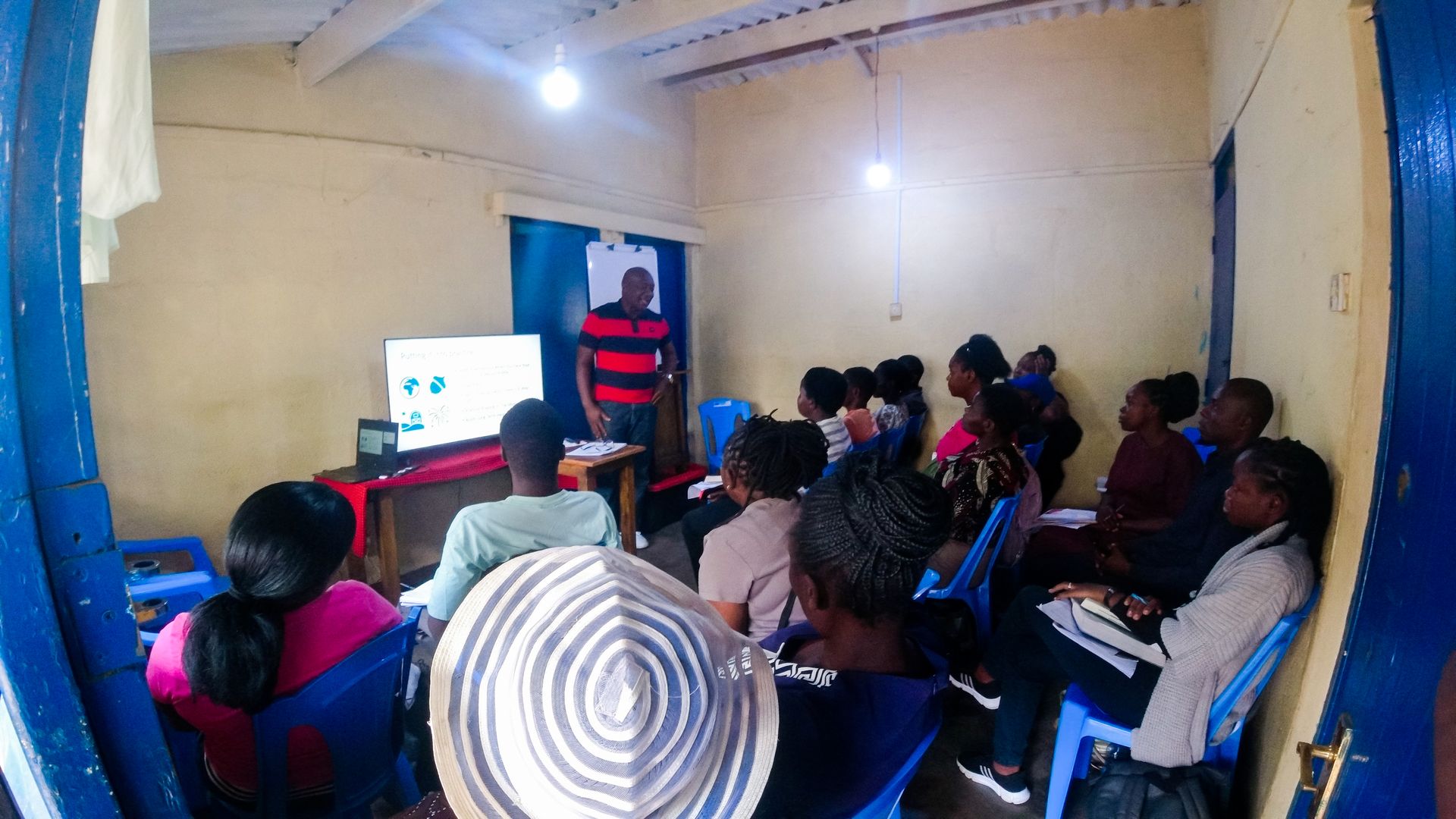
2013 COMMUNITY TAKES SHAPE

Families began building community together.

The early outreach contributed to the formation of the GIKEBO Disabled Self-Help Group, bringing together families from Gachuba, Kebirichi and Bonyunyu villages.

What began as a local support circle developed into a network of 43 families gathering for emotional support, spiritual growth and economic empowerment.

Community-led initiatives such as table banking gave families opportunities to build mutual support and strengthen economic participation together.

43 FAMILIES • TABLE BANKING • COMMUNITY
2013–19 LEARNING THROUGH PROXIMITY

Knowledge deepened. So did the conviction.

During these years, the founders continued developing expertise in Special Needs Education and community development while the mission gradually expanded beyond the Kisii region.

Professional knowledge was increasingly shaped by relationships and lived realities. Disability inclusion became more than an area of work; it became an enduring commitment affecting how community, family, faith and participation were understood.

Their family journey also included becoming foster parents to children with disabilities. This personal experience deepened their understanding of both the gifts children with disabilities carry and the practical barriers families can encounter, without defining the children by disability or turning family life into a programme.

These years reinforced a growing belief that disability inclusion should not remain a specialist issue. It needed to become part of how communities, institutions and churches understand belonging.

EDUCATION • FAMILY • COMMUNITY • ADVOCACY
A TURNING POINT 2020
SEEING THE GAP

Seeing the gap. Choosing to respond.

Through years of service with Christian parachurch organizations, the leadership encountered a significant and recurring gap: disability inclusion was often missing from community development projects and from the structures of church life.

Persons with disabilities were part of these communities, yet programmes, ministries and environments were not always designed with their participation in mind.

This realization strengthened a long-term commitment to advocacy and practical inclusion. The question increasingly became not simply how to provide support, but how to help communities and institutions become more capable of including persons with disabilities.

The journey eventually moved toward Kibera, where there was significant need for specialized support for vulnerable young people, persons with disabilities and families navigating disability within an informal-settlement context.

KIBERA

New ground. Same heart.

Moving into Kibera did not replace the earlier journey. It created a new context in which the same commitment to disability inclusion could become more structured, practical and locally responsive.

2022

Bridging a visible gap.

In Kibera, the mission evolved as the leadership recognized that many local organizations were not actively serving the disability community.

More formal programmes were introduced to help bridge this gap. Expertise in special education was combined with grassroots community service to provide direct support to persons with disabilities and families navigating disability within informal settlements.

The work remained relational: understanding each family's situation, identifying barriers and building practical responses around real community needs.

2023

A centre of belonging.

The vision gained a physical home with the opening of a community centre in Kibera — a space designed around hope, healing, connection and belonging.

The centre created opportunities for families to access therapy-based support, inclusive technology, learning and faith-based community.

More importantly, it offered a place where persons with disabilities and their families could be known as people, not reduced to a diagnosis or a need.

2025 A DEFINING MILESTONE

A stronger structure. Africa Ability Trust.

In 2025, years of grassroots experience, disability advocacy, community relationships and programme development reached an important organizational milestone with the formal registration of Africa Ability Trust in Kenya.

Registration did not create a new heart for the work. It gave an existing calling a stronger structure for governance, accountability, partnership and long-term sustainability.

Through this structure, Africa Ability could strengthen its commitment to persons with disabilities and their families in Kenya while developing a vision capable of contributing more widely across Africa.

Existing and emerging work in therapy, education, community inclusion, advocacy and economic empowerment could now grow within a clearer organizational framework.

Africa Ability Trust community work
THE STRUCTURE GREW

What changed. What remained.

WHAT CHANGED

Structure created room for the mission to grow.

01
A formally registered charitable Trust.
02
Stronger governance and accountability.
03
A clearer platform for local and global partnerships.
04
Greater capacity for sustainable programme growth.
05
A wider vision for disability inclusion in Kenya and across Africa.
WHAT REMAINED

Growth did not require us to leave the heart behind.

01
The same commitment to dignity.
02
The same proximity to persons, caregivers and families.
03
The same faith-rooted foundation.
04
The same belief in ability, participation and belonging.
05
The same desire to see communities become more inclusive.
Stronger structure. Same heart. Deeper reach.
2 0 2 6 GROWING THE MOVEMENT
THE CURRENT CHAPTER

From individual programmes toward cultures of inclusion.

Today, Africa Ability continues its grassroots work while widening the conversation about disability inclusion. The goal is not only to provide individual support, but also to help the environments around people become more inclusive, confident and sustainable.

01 • PEOPLE

Persons & Families

Continuing to walk alongside persons with disabilities, caregivers and families through practical support, skills, relationships and pathways toward greater participation.

02 • CHURCH

Church Inclusion

Equipping churches and Christian ministries to strengthen accessibility, discipleship, belonging, service and leadership alongside persons with disabilities.

03 • MUSIC

The Ability Band

Creating opportunities for musicians with disabilities to use their gifts, worship, minister, perform and demonstrate the contribution persons with disabilities bring to church and community life.

04 • LIVELIHOODS

Economic Empowerment

Strengthening practical skills and livelihood opportunities for caregivers and families so that inclusion also addresses economic participation and independence.

05 • SYSTEMS

Organizations & Workplaces

Helping institutions move from good intentions toward disability-inclusive systems, accessible environments, better practice and stronger organizational culture.

06 • TOGETHER

Partnerships

Building relationships with churches, organizations, disability advocates and partners who share a commitment to dignity, access and meaningful participation.

THE STORY IS STILL BEING WRITTEN

Every chapter has widened the vision. The heart remains the same.

From homes and churches in Nyamira, to families organizing together, to years of learning and service, to Kibera, a community centre and the formation of Africa Ability Trust, each chapter has helped clarify the same conviction: persons with disabilities should have the opportunity to belong, contribute, grow and lead. The next chapters will continue to be written alongside the people, families, communities, churches and organizations with whom we serve.

CONTINUE THE JOURNEY

See where the story is going next.

Explore the work Africa Ability is doing today and meet the people helping shape its next chapter.

What We Do → Our People →